Enter product details (such as color, size, materials etc.) and other specific requirements to receive an accurate quote.
leave a message
If you are interested in our products and want to know more details,please leave a message here,we will reply you as soon as we can.
Submit

Blog

Home Blogs

Blog

  • Empowering Water Parks With Solar Energy
    Empowering Water Parks With Solar Energy
    Nov 09, 2026
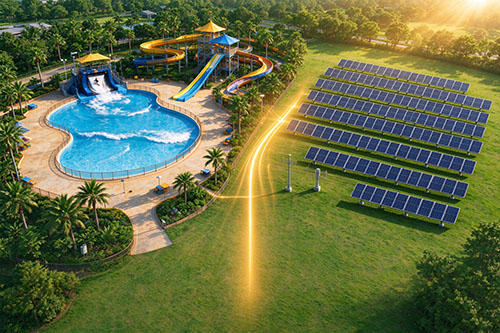
    Integrating Photovoltaic Power Generation Into Water Parks A thriving water park typically presents a lively scene: water splashing joyfully from various attractions, visitors screaming with excitement, crowds gathering around surf simulators, interactive play areas full of children's laughter, and wave pools packed with guests. Yet, behind these happy moments lies a massive consumption of electricity. Wave pool blowers, large scale water circulation pumps, automated filtration systems, heating equipment, high power lighting, the hydraulic and pumping mechanisms for surf simulators and other various infrastructure. All of these equipments require significant amounts of electricity to keep the park running continuously throughout the day. For water park owners and investors, persistently high electricity costs represent a significant, long-term operational burden. With the ongoing volatility of global energy price, an increasing number of park operators are seeking robust and sustainable solutions. So, why not Integrating a solar power system into your water park? It's is not only helps reduce operating costs but also aligns with the growing global demand within the tourism and leisure market for low-carbon, eco-friendly visitor experiences. As a excellent solutions provider for water parks, Longmatic specializes in custom fiberglass water slides, aquatic play structures, tsunami wave pools, surfing simulators, lazy rivers, and themed water play splash tower. We offer comprehensive services, including master planning and design, manufacturing, on-site installation, staff training, and long-term operational consulting. To improve our service level, we have introduced a solar photovoltaic (PV) power generation solution specifically designed for water park projects. Whether you are developing a new water park resort or upgrading an existing facility, the PV system is suitable for you. We can also help you implement a solar power solution that effectively reduces your operational costs. Why Water Parks Are Well-Suited For Solar Power Integration The peak season for most water parks coincides precisely with the period of strongest sunlight and highest solar radiation. Solar power can help alleviate the huge demand of electricity for the water parks. Facilities such as wave pools and surf simulators, in particular, consume a large amounts of energy. Furthermore, water parks typically have open layouts, it provides a prefect environment for the solar system that will not be shaded by the around buildings, making them store electricity more efficiently. Rooftop and canopy-based photovoltaic systems are currently the most mature and widely adopted solutions. PV arrays can be installed on the roofs of various park facilities—such as service buildings, ticket centers, changing rooms, restaurants, and storage warehouses—or integrated into specially designed solar canopies positioned over queuing areas, rest zones, dining spaces, and parking lots. These canopies generate electricity while providing shade from the intense sun for visitors and staff, creating more comfortable spaces for rest without encroaching on valuable land reserved for attractions. Year-round indoor temperature-controlled water parks are not constrained by the seasons. Even during the autumn and winter months—when sunlight is less intense—PV systems can also help offset the electricity demand required for water circulation, ventilation and dehumidification, indoor lighting, or auxiliary heating. Consequently, these PV systems can significantly reduce the burden of electricity costs for water parks. Consequently, the PV systems can significantly reduce the burden of electricity costs for water parks. Actual Value For Theme Park Operators The most immediate advantage of installing solar energy infrastructure is a significant reduction in recurring operating expenses. Energy costs typically account for a substantial portion of a water park’s monthly operating budget. Once installed and operational, solar panels generate electricity continuously. Over their multi-decade lifespan, these systems deliver sustained cost savings, improve cash flow, and enhance the long-term profitability of the investment. A "green" brand identity is also highly valuable. Today, an increasing number of travelers prioritize environmental considerations when choosing their destinations. Whether they are families, school groups on educational trips, corporate clients, or simply eco-conscious individuals, even visitors are actively seeking out attractions that genuinely embrace sustainability. A water park equipped with a solar power system offers a compelling marketing advantage. You can highlight this commitment to renewable energy across your official website, social media channels, booking platforms, and through signage throughout the park. This not only helps cultivate a unique brand image—setting you apart from other water parks—but also attracts environmentally-minded visitors and encourages repeat visits. Furthermore, many resorts have found that possessing "green" credentials makes it easier for them to establish partnerships with sustainable tourism initiatives and organizers of corporate events. Our solar energy solutions are suitable for both new-build projects and renovation initiatives. If you are developing a brand-new water park, our engineers will integrate solar planning from the initial design phase. We coordinate the layout of attractions, guest circulation paths, utility routing, and solar arrays to ensure seamless integration, thereby preventing costly conflicts during the construction phase. For existing parks already in operation, we conduct a comprehensive assessment to identify optimal installation areas, calculate feasible system capacity, and develop an upgrade plan designed to minimize disruption to daily guest operations throughout the construction process. Successfully Implemented In Russia In Russia, we have successfully implemented solar panels to generate power for an amusement park. This project spanned several months, from initial site assessment and planning, contract finalization through equipment manufacturing, logistics coordination, on-site civil works, and the precise installation and commissioning of the solar array, all the way to final operational launch. At every stage, we approach our work with the utmost rigor, meticulously refining every technical and operational detail while consistently prioritizing safety, reliability, and long-term performance. We remain steadfastly committed to delivering solutions that stand the test of time, earning our clients' trust through exceptional performance and serving as their reliable and long-term partner. Taking advantage of the site’s expansive open space, we have strategically positioned the solar array on a large lawn near the main leisure area. This ensures the power infrastructure operates effectively while remaining entirely separate from the swimming pools, slides, and walking paths, thereby avoiding any disruption to visitor circulation or leisure activities. At the same time, this striking installation serves as a compelling and novel landscape feature. As visitors play or relax in the water, or explore various attractions throughout the park, they can easily take note of this innovative renewable energy system. Many people will interest in it. That' s very cool. The global leisure industry is steadily transitioning toward sustainability. Investors increasingly view green upgrades as more than just an act of environmental philanthropy. They recognize that renewable energy serves as a forward-looking business strategy—one that safeguards profit margins and bolsters the resilience of assets against energy market volatility, thereby laying a solid foundation for future growth. When you partner with Longmatic, you gain far more than just high-quality water slides, wave generating equipment, and surf simulators. We also provide creative and practical green energy solutions that enhance your attraction from financial, environmental, and commercial perspectives. Our mission is to help you build a water park that not only delivers unforgettable, joyful experiences for your guests but also operates in a more responsible and efficient manner. If you are planning to build a new water park or are looking to reduce energy costs at an existing facility, please feel free to contact our team. Share the details of your site, your budget expectations, and your vision for development with us, and we will craft a comprehensive, tailored solution for you… F A Q  Will solar installations interfere with park visitors or take up space intended for recreation?+ With proper planning, such situations can be avoided. At the outset of a project, our design team maps out pedestrian circulation, play areas, and visual corridors, ensuring they are kept at an appropriate distance from other types of recreational zones. Is it necessary to station personnel there?+ No. The system operates automatically. Through remote monitoring, the park management team and our technical staff can track system performance, receive fault alerts, and perform diagnostics without needing to be on-site at all times. What maintenance is required for solar energy systems?+ The maintenance workload is relatively light. It involves regular routine cleaning of the surfaces to remove dust and fallen leaves, as well as visual inspections of the mounting structures and wiring. Can solar power work in rainy or cloudy weather?+ Even on cloudy days, the system can still generate electricity, though the output will be lower. When solar power generation is insufficient, the power grid will automatically supply the additional electricity required, ensuring that all rides and supporting facilities can operate safely. How much time will it take to build this project?+ The project timeline depends on the scale, site conditions, local permitting, equipment production and logistics, as well as installation and commissioning. var faqWrap = document.getElementById('faq-wrap'); faqWrap.addEventListener('click', function(e){ var q = e.target.closest('.faq-question'); if(!q) return; var item = q.closest('.faq-item'); var answer = item.querySelector('.faq-answer'); var icon = item.querySelector('.faq-icon'); var isOpen = item.dataset.open === 'true'; if(isOpen){ answer.style.maxHeight = '0px'; icon.textContent = '+'; item.dataset.open = 'false'; }else{ answer.style.maxHeight = answer.scrollHeight + 'px'; icon.textContent = '−'; item.dataset.open = 'true'; } })
    Read More
  • Why the cheapest water park equipment often ends up costing you the most
    Why the cheapest water park equipment often ends up costing you the most
    Nov 01, 2026
    Now, the global water park market is on a steady growth trajectory, with projections indicating an expansion from approximately $16 billion in 2025 to over $27 billion by 2034—a compound annual growth rate (CAGR) of about 6%. The specific segment comprising water rides and slides alone is expected to reach a valuation of $32 billion by 2035. Driven by a 63% increase in household leisure spending and a 52% rise in tourism-related entertainment expenditure, water parks have firmly established themselves as one of the most attractive segments within the global leisure economy. Yet, beneath this industry growth, a recurring pattern persists: investors who aggressively push for the lowest possible prices during equipment procurement often end up with the poorest long-term returns. This is because a critical factor—The Total Cost of Ownership(TCO)—often overlooked during the procurement. For water slides and various types of water attractions, the initial purchase price represents only a fraction of the total cost. Over a typical 10- to 20-year operational lifespan, the cumulative costs—encompassing maintenance, operational downtime, refurbishments, safety-related liabilities, and lost revenue from visitors due to facility closures—can amount to three to five times the initial capital investment. Part Ⅰ: The True Cost Structure of Water Park Attractions When evaluating equipment, most first-time investors tend to focus on a single dimension: the unit price. However, the financial performance of water park attractions over their entire lifecycle follows a very different logic. Below, we break down the true cost components behind the investment. Initial Procurement Cost This is the most straightforward figure—the quoted price for water slides, play towers, wave-making systems, or integrated attraction complexes. It encompasses manufacturing, transportation, and basic installation. For a typical mid-sized water park, equipment procurement accounts for approximately 40%–55% of total capital expenditure. While significant, this is far from the whole costs. Maintenance And Upkeep This is the area where hidden costs most easily accumulate. Industry benchmarks indicate that annual maintenance expenditures rise in proportion to the scale of the park and the volume of visitors. Over a 10-year operational cycle, a high-traffic park may spend an amount equivalent to 50%–80% of the original equipment value on maintenance alone. This is where the difference between product quality and price becomes apparent: a well-crafted fiberglass slide with a high quality gel coat finish typically requires only routine cleaning and waxing, whereas an inferior product may necessitate frequent gel coat repairs, leak-proofing, and structural reinforcement. Downtime And Revenue Loss When an attraction is taken out of service for maintenance or repairs, it not only leads to a direct loss of revenue from admissions, food and beverage sales, and other ancillary services, but it also erodes visitor trust and damages brand reputation. The peak season for a water park typically lasts only 60–90 days per year, during this period, even a one-week closure of a core attraction can have a severe impact on the season’s overall profitability. Therefore, equipment reliability is by no means a mere "nice-to-have" feature, it is a core driver of revenue. Equipment with a 98% uptime rate can generate significantly higher profits compared to equipment with only an 85% uptime rate—making it a worthwhile investment, even if the initial purchase price is 15%–20% higher. Refurbishment In Mid-term Overhauls While the structural substrates of fiberglass-reinforced plastic (FRP) surfaces can typically last for 25 to 50 years or more, the gel coat—the outer protective layer—has a shorter lifespan. After approximately 15 to 20 years, it often exhibits noticeable fading, chalking, or surface wear. For commercial water parks with high operational loads, this timeframe may be even shorter. Mid-term refurbishment—which may include re-applying gel coat, repainting, replacing worn moving parts, or restoring themed elements—can cost between 20% and 40% of the original equipment price. Therefore, opting for equipment manufactured using advanced surface technologies can extend the interval between refurbishments and reduce the scope of work required. Safety Liability And Compliance Equipment that fails to meet compliance standards not only poses a risk of accidents but also threatens the viability of the entire project. A safety incident can lead to catastrophic consequences, including mandatory shutdowns by regulatory authorities, legal liability claims, increased insurance premiums, and damage to the brand’s reputation. Part Ⅱ: The Economics of Equipment Lifespan Let’s illustrate this point with a hypothetical comparison. Imagine two water park investors—let’s call them “Park A” and “Park B”—who are each developing a medium-sized family water park. Both parks feature an identical lineup of water slides, play structures, and wave pools. Cost Dimension Park A (Budget Option) Park B (Quality Option) Initial equipment procurement $1,000,000 $1,200,000 Annual maintenance (year 1–5) $60,000/yr (6% of value) $36,000/yr (3% of value) Annual maintenance (year 6–10) $80,000/yr (8% of value) $48,000/yr (4% of value) Mid-life refurbishment (year 8) $300,000 $120,000 Average seasonal downtime 18 days 5 days Estimated lost revenue per downtime day $8,000 $8,000 10-year TCO (excluding downtime) $2,000,000 $1,800,000 10-year downtime cost $144,000 $40,000 Total 10-Year Cost $2,144,000 $1,840,000 * The data above is provided for reference only and is based on industry benchmarks. Actual costs may vary depending on project scope, geographic location, and operational conditions. The conclusion is compelling: over a 10-year period, opting for a lower-priced "economy" solution actually results in an additional $304,000 in total costs. This calculation does not even account for intangible business risks, such as visitor dissatisfaction stemming from the dated appearance of attractions or frequent unscheduled downtime, negative online reviews, and long-term erosion of brand value. What has led to this cost gap? This cost difference stems from three core manufacturing standards and low-cost suppliers often compromise on:   FRP Resin Quality & Laminate Layup Low cost manufacturing often employ thinner laminate structures, lower-grade resins, and accelerated curing processes. While these shortcuts may reduce initial raw material and labor costs, they come at the expense of the product's impact resistance, UV stability, and long-term structural fatigue performance. Anti-corrosion For Steel Structures The environment of a water park poses a significant challenge for corrosion protection, characterized by chlorinated water, sustained high humidity, and frequent splashing. Comprehensive hot-dip galvanizing of all steel structures is essential to ensure a reliable 10-year service life. Cutting corners in this process will lead to persistent corrosion, compromising the structural integrity of the platforms and ultimately resulting in the premature failure of the equipment and incurring high replacement costs. Surface Treatment Technology The gel-coat surface is the part with which every visitor has the most direct contact. Surfaces produced via traditional open-mold fiberglass processes often suffer from issues such as fading, chalking, and surface roughness after several cycles of use. In contrast, advanced manufacturing processes like L-RTM can produce components with a consistent and high-quality finish on both sides, ensuring a more durable and aesthetically pleasing appearance. Furthermore, this approach simplifies cleaning and reduces the labor required for routine maintenance. Part Ⅲ: Attractions That Truly Drive Visitation Not all attractions contribute equally to the bottom line. Relying solely on price as a selection criterion often leads to underinvestment in the attractions that drive repeat visits. The Shift Toward Family Entertainment The market is clearly shifting toward experiences that are family-friendly and suitable for all ages. Data indicates that child-centric attractions account for 42% of the global demand for water park offerings, while family raft rides and shallow water play areas now make up 37% of all newly installed attractions. This shift is critical when selecting equipment, for the following reasons: Extreme thrill slides draw teenagers, but they target a narrower audience and tend to have faster guest turnover. While these rides remain vital for marketing hype and social attention, they are less effective at bringing families back time and again. By contrast, themed play structures and interactive water encourage families to stay for hours, extending their time in the park, boosting food and beverage spending, and increasing the likelihood of return visits. The well-designed play structures can accommodate hundreds of guests simultaneously, helping to distribute crowds during peak hours and preventing excessive queuing at a few major, high-thrill slides. Wave pools and lazy rivers serve as the "social hubs" of a water park. Offering moderate intensity and high capacity, they cater to guests of all ages and form a stable foundation for daily revenue. Themed Vs. Generic From a purely mechanical standpoint, a generic water slide is identical to a themed one. However, the guest experience and the potential for social media exposure are vastly different. By incorporating thematic elements, such as pirates, jungles, oceans, or fantasy worlds, an attraction transcends its role as mere infrastructure and becomes a "destination" in its own right. Investments in professional thematic design, 3D visualization, and custom-themed components are ultimately recouped through higher revenue per visitor, rather than through lower construction costs. From a revenue perspective, themed attractions offer several key advantages: It has higher perceived value, which justifies premium ticket pricing. Stronger word-of-mouth and organic social media sharing. Extended visitor dwell times. Superior performance in highly competitive markets. Modularity And Flexibility Modern water park equipment is increasingly moving toward modularity. This is not merely a manufacturing convenience but an operational advantage. Modular water play towers and aquatic systems empower operators to: Implement construction in phases, scheduling equipment deployment based on market demand and budget. Upgrade or expand specific areas without requiring a full-park closure. Adjust the interactive intensity of water attractions dynamically based on seasonal shifts or visitor volume. Part Ⅳ: Risk Analysis This is the risk most frequently overlooked by investors—one that often only receives attention after a costly accident has occurred. The Hidden Costs Of Barely Meeting Standards If an amusement ride platform is designed solely with the goal of passing a load test, it is highly likely to develop structural fatigue cracks after several periods of peak operation. Fiberglass components with insufficient lamination thickness may undergo delamination under repeated impact. Steel structural joints with substandard weld quality will also see their integrity gradually degrade over years of thermal expansion and contraction. The consequences of such failures extend far beyond mere repair costs, triggering a cascade of commercial risks: Forced suspension of operations during peak revenue periods Regulatory investigations and financial penalties Legal claims and high litigation costs resulting from personal injuries Permanent damage to the amusement park’s reputation High-quality amusement equipment is designed with an intentional safety buffer—such as using more structural steel, increasing the thickness of fiberglass laminates, conducting multiple rounds of weld inspections, and performing rigorous load verification before shipment. This carefully engineered safety margin acts as a form of operational insurance. While it increases initial capital expenditure, it provides a robust safeguard that effectively mitigates the risk of potentially catastrophic losses down the line. After-Sales Support When issues arise, you need a manufacturer that acts responsibly—one capable of supplying the right spare parts and promptly dispatching qualified field engineers. Consequently, a supplier’s reliability remains critical long after the final payment for the equipment has been made. A manufacturer with a dedicated after-sales team, a robust quality traceability system and extensive experience in overseas installations is more than just a vendor; they are a long-term partner capable of supporting the stable, day-to-day operation of your facility. Conclusion In the water park industry, the initial quote you receive is often the lowest figure you will encounter throughout the entire investment process. The true cost of an attraction reveals itself over its 15-to-20-year service life—reflected in maintenance records, seasonal operational performance, guest feedback, and the long-term return on investment (ROI), which may either grow steadily or gradually diminish. The global water park market is currently experiencing sustained growth, driven by an ever-increasing demand for family entertainment. Today’s guests have a wider array of leisure options, and they increasingly demand higher construction quality, operational safety, and immersive experiences. In such a competitive market, successful investors do not focus solely on the lowest initial purchase price. Instead, they prioritize attractions that offer long-term, reliable performance and effectively encourage repeat visits—a goal that requires the support of a dependable supplier. Ultimately, the most cost-effective water park equipment is not the one with the lowest price tag, but the solution that maximizes your net profit over its entire life cycle. Are you ready to explore your water park project? Whether you are developing a small splash area, a family resort water park, or a large scale landmark theme park, our engineering team is here to help you plan for the economic viability of your investment throughout its entire lifecycle. Contact Longmatic for a free project consultation and receive a customized equipment solution tailored to your site conditions, budget, and target audience.
    Read More
  • What Is Splash Pad Equipment?
    What Is Splash Pad Equipment?
    Oct 16, 2026
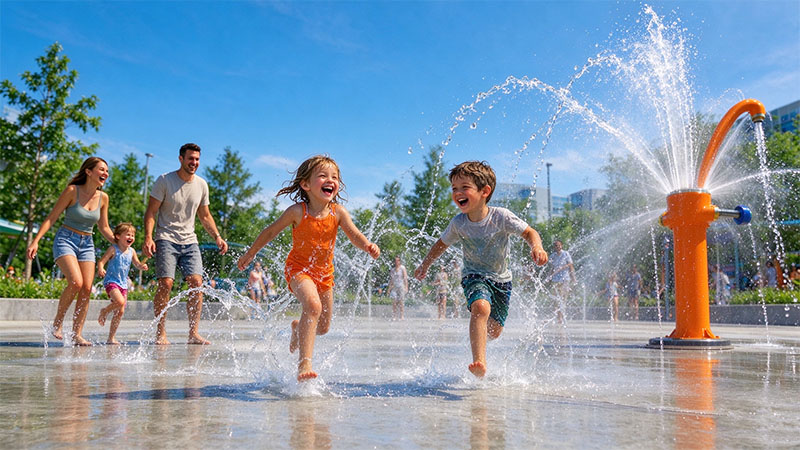
    Introduction Of Splash Pad Equipment Splash pad equipment has become one of the fastest-growing product categories in the aquatic recreation industry. Unlike traditional swimming pools, the splash pad—also known as a spray park—is a "zero-depth" water play area. In the following sections, I will provide an overview of splash pads. Splash pad installations comprise a variety of components, including nozzles, water features, control systems, underground piping networks, and safety surfacing. Water is delivered through nozzles, spray heads, and other features—installed either above or flush with the ground—and is promptly removed via an integrated drainage system. Because water does not accumulate on the surface, there is no need for professional lifeguards. Furthermore, these installations require less space and entail lower operating costs. Most importantly, splash pads eliminate the primary safety hazard associated with traditional aquatic facilities: the risk of drowning. Children can move freely between various play features, and unlike in a swimming pool, parents do not need to enter the water or remain hyper-vigilant; they can easily supervise their children from the sidelines. This makes splash pads an ideal solution for public parks, theme parks, hotels, resorts, childcare facilities, and residential communities. While many purchasers focus primarily on the visual appeal of the spray features, the success of a splash pad project actually hinges on this critical, underlying system: the hydraulic distribution system, the automated control system, and the slip-resistant safety surfacing. Choosing inadequate components for these essential, hidden systems often leads to frequent leaks, excessive water costs, and even potential safety risks. A complete splash pad is a cohesive system, not merely a collection of individual components. Next, we will introduce the core components of a splash pad system.   The Components Of a Splash Pad System. Installations designed for visitors to enjoy and interact with, such as water cannons, tipping buckets, arches, and various themed sculptures. Water Play Features Water-spraying devices embedded in the ground, capable of producing fan-shaped, conical, or mist-like water patterns. Ground Splash Nozzles Comprising pumps, valves, and piping, this system ensures consistent water pressure for all play features. Water Supply System Manages the sequence and cycles of water flow, while also allowing for manual intervention by operators. Control System A network of channels, tanks, or sumps designed to collect and remove used water. Drainage And Collection System Equipment dedicated to the filtration and disinfection of the water. Water Treatment System Flooring materials designed to be slip-resistant and shock-absorbent, specifically tested for use in wet environments. Surface Paving window.onload = function(){ const wraps = document.querySelectorAll('.bread-img-wrap'); wraps.forEach(item=>{ const tip = item.querySelector('.bread-tip'); item.addEventListener('mouseenter',function(){ tip.style.opacity = '1'; }) item.addEventListener('mouseleave',function(){ tip.style.opacity = '0'; }) }) }   While a piece of equipment may appear simple on the surface, it is actually a complex assembly of interconnected and interdependent components. For instance, pairing an array of elaborate features with an underpowered water pump will not only disappoint visitors but also place an excessive strain on the equipment, leading to premature wear and tear. Do You Know How To Choose The Right Equipment Equipment specifications should be determined based on the specific conditions of the site, rather than relying solely on product catalogs. Before making a purchase, consider the following questions: 1. Who is the target user group? Young children, school-aged children, and mixed-age groups have different requirements regarding equipment height and water spray intensity. For young children: Facilities should be low in height with gentle water flow, the edge must be rounded and smooth, surfaces should be slip-resistant, and there should be no hard, protruding parts. For older children and adults: Features such as dynamic water towers, tipping buckets, and interactive spray nozzles can be incorporated. 2. What is the scale of the site? The number of installations and the spacing between them determine the site’s capacity and the necessary safety clearances. Before construction, ensure sufficient space is allocated for piping, the pump room, and maintenance access paths. For smaller sites, opt for compact installations, while larger sites—such as commercial parks—can accommodate more extensive setups, such as multi-unit interactive water towers. 3. What are the local climatic conditions? The length of the operating season affects the return on investment and the durability of the equipment. Before selection, ensure the equipment is suitable for the local climate and consider how it will be maintained. 4. What is your maintenance capacity? You must determine the level of maintenance support available; complex systems require trained professionals, as well as a practical and well-defined routine maintenance plan. Considering these factors will help you determine the most appropriate splash park equipment. Next, we will cover topics related to site installation and other relevant matters. Site Preparation And Installation While a commercial splash pad may appear simple from the surface, its core engineering lies entirely underground. A successful installation relies on a thorough pre-construction site assessment and systematic planning to ensure long-term safety, durability, and stable operation. A stable, well-drained site is the foundation, preventing surface cracking caused by ground settlement. Compacting the subgrade and installing layered base materials is essential to prevent soil displacement. If the foundation is not properly prepared, the combination of constant water load and foot traffic can lead to uneven settlement, surface delamination, and premature deterioration. A properly designed water supply system is required. This means that pipe sizing must align with the flow rate requirements of all water features to ensure balanced water pressure across the entire area. Balanced pressure ensures consistent performance from every nozzle. Excessive pressure can cause water to spray outside the designated play area, while insufficient pressure diminishes the intended water effects. Electrical systems must be designed for wet environments and positioned at a safe distance from the play area. All wiring, junction boxes, pumps, and control components must comply with electrical codes for wet locations. Furthermore, ground-fault protection must be installed to eliminate the risk of electric shock, and all electrical enclosures must be located outside the splash pad area. Adequate drainage capacity is necessary to handle peak water flow and prevent standing water. The drainage layout, grate placement, and pipe gradients must be carefully engineered to ensure that surface water is drained rapidly, even when all water features are operating at full capacity. Standing water not only increases the risk of slips and falls but also accelerates the degradation of surface materials and creates a breeding ground for bacteria. Convenient access must be provided for maintenance personnel to reach valves, pumps, and control panels. During the site planning phase, dedicated equipment rooms and access paths should be incorporated. This facilitates routine inspections, component replacement, winterization, and emergency troubleshooting—all without the need to disrupt the surface of the play area. Requirements Of Daily Maintenance Regardless of the type of amusement equipment, daily maintenance by operators is essential. Such maintenance ensures stable equipment operation, extends the lifespan of assets, helps control operating costs by optimizing water and energy consumption, maintains water hygiene, and guarantees visitor safety. Routine maintenance tasks typically include: Periodically inspecting nozzles to clear any blockages and assessing them for wear, corrosion, or damage caused by continuous water flow. Components with significant damage should be replaced promptly. Monitoring the operational status of water pumps, verifying their performance and flow rates, and ensuring pressure balance throughout the circulation piping network. Clean the water intake screens and filter elements to prevent clogging. At the same time, test and adjust water chemistry parameters to ensure that disinfection levels meet the prescribed standards. Inspecting the surfaces in play areas for delamination, lifting, cracks, uneven seams, or the presence of biofilms or mineral deposits that could create a slipping hazard. Conducting comprehensive functional tests of control logic, sensor triggers, and automated operating sequences before the equipment is put into service each operating season. Documenting all inspection data, test results, and repair records in a maintenance log to facilitate compliance audits and proactive troubleshooting. Proper equipment maintenance is key to the long-term success and stability of your amusement park. Why Splash Pads Are a Smart Investment Splash pads are becoming increasingly popular worldwide. They not only offer effective solutions to key operational challenges but also present significant revenue potential for water park developers and commercial amusement operators. Low water consumption: As "zero-depth" aquatic play facilities, splash pad equipments require far less water than standard swimming pools designed to accommodate a similar number of visitors. Low initial construction costs: There is no need for deep excavation or large pool basins, resulting in a smaller construction scope. If the budget is limited, water spray features can be added incrementally over time, allowing for phased upgrades rather than requiring a large, one-time capital investment. Reduced labor costs: With no deep-water areas, the risk of drowning is virtually eliminated. Most splash pads do not require the presence of lifeguards, which significantly lowers expenditures on staff wages and insurance, while also reducing the risk of liability from safety incidents. They are ideal for young children, making them highly appealing to parents. Furthermore, they are easy to maintain, ensuring low long-term operational costs. Flexible spatial layout: Splash pads offer versatile planning options and can be installed in a wide variety of locations, including parks, resorts, schools, and shopping centers. Even when closed during the winter, the space can be repurposed for other outdoor activities, making it a perfect choice for creating multi-functional recreational areas. Short return on investment period: Lower upfront construction costs and minimal daily maintenance requirements shorten the time needed to recoup the initial investment. Additionally, splash pads are highly effective at attracting foot traffic, which can stimulate economic activity in the surrounding area. Highly inclusive design: The equipment is safe and accessible, catering to adults of all ages as well as children with varying physical abilities, ensuring a broad appeal to a diverse range of visitors.   FAQ ABOUT SPLASH PAD In what types of locations are splash pads suitable?+ It is widely used in various settings, such as water parks, scenic areas, resorts, hotels, and community parks, serving both as a decorative element and as an attraction for visitors to enjoy. Is it possible to forgo the zero-depth splash pad?+ Absolutely. Water play equipment can be installed in a shallow pool alongside a splash tower, enriching the range of available attractions. Are these water play equipments safe for kids?+ The edges and corners of each piece of equipment have been rounded and smoothed, ensuring they will not scratch children. The water streams produced by the equipment are very gentle, with no forceful impact. Is customized design available?+ Yes, we can provide customized designs, including equipment appearance, water spray schemes, color schemes, thematic styles, and more. Do you offer installation services?+ Yes, we can provide services including civil engineering, site setup, and equipment installation. var faqWrap = document.getElementById('faq-wrap'); faqWrap.addEventListener('click', function(e){ var q = e.target.closest('.faq-question'); if(!q) return; var item = q.closest('.faq-item'); var answer = item.querySelector('.faq-answer'); var icon = item.querySelector('.faq-icon'); var isOpen = item.dataset.open === 'true'; if(isOpen){ answer.style.maxHeight = '0px'; icon.textContent = '+'; item.dataset.open = 'false'; }else{ answer.style.maxHeight = answer.scrollHeight + 'px'; icon.textContent = '−'; item.dataset.open = 'true'; } })
    Read More
  • Meet The Multi-Interactive Aqua Play Tower
    Meet The Multi-Interactive Aqua Play Tower
    Oct 04, 2026
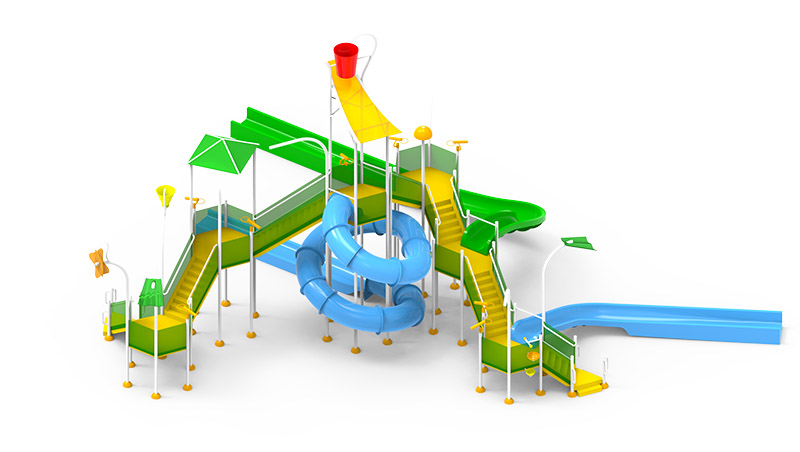
    If you are planning a children's play area, a resort pool, or a family splash zone and aim to deliver an exceptional play experience within a limited footprint, the core challenge is often this: how do you pack enough diverse activities into a single play tower to keep children aged 3 to 12 entertained for hours, without making the structure look cluttered or obtrusive? This water play tower AQH-17 was designed precisely to meet that need. It is a compact, multi-level interactive water play structure that cleverly integrates three distinctive slides, a visually striking tipping bucket, and over a dozen water-play features—all within a footprint of approximately 21 by 19 meters. Let’s take a closer look at what makes it unique. 1. Key Highlight: A 1,000-liter tipping bucket that instantly captures every child's attention. Mounted above the tower's bright yellow, slanted roof is the signature red tipping bucket. It slowly fills with water, building a sense of anticipation, before releasing the entire load in a steady, rhythmic cascade onto the platform below. For operators, this feature offers more than just a perfect photo opportunity; it serves as a natural crowd-puller. As children gather underneath and parents reach for their phones, the tower becomes the focal point of the children's water play area. The bucket's operation cycle is fully adjustable, allowing you to set the tipping interval based on visitor density and water usage budgets.   2. Three slides, three thrilling experiences—all on a single tower A common pitfall for small-to-medium-sized water attractions is offering only one type of slide, which can quickly lead to visitor boredom. In contrast, this multi-slide tower offers three distinct sliding experiences: Enclosed spiral tube slide (blue): A fully enclosed, double-loop spiral slide starting from the upper platform. Designed for "older kids," the interior is dimly lit to heighten the thrill, yet features strategic openings at the turns to maintain a sense of openness and reassurance. Extended Open Slide (Green): An open-air slide extending from the middle platform. The expansive view adds an element of surprise and delight, while allowing parents to watch their children slide down the entire length, offering greater peace of mind. Low Open Slide (Light Blue): A shorter, gentler open slide that transitions into a flat run-out section at the bottom. It is ideal for young children or first-time riders who might be apprehensive about speed, allowing them to enjoy the ride without worrying about going too fast.   The multi-slide design also translates to higher rider throughput. During busy summer days, having three separate exit points ensures a smooth flow of traffic at the staircase, preventing bottlenecks and congestion.   3. The platform level features over a dozen interactive water play elements. We have cleverly integrated a wide variety of small-scale water play features at the base and across the platforms, allowing children to spend less time queuing and more time having fun: Rotatable water cannons and nozzles for interactive water-spraying games; Mushroom-shaped sprayers and trumpet-style tipping water features; Small rotating water wheels and mini tipping buckets.   The dimensions of all facilities are designed to cater to different age groups, ensuring they are suitable for independent play by children of various ages while also allowing adults to join in the fun.
    Read More
  • Playground Equipment Can Enhance Children’s Independence And Creativity
    Playground Equipment Can Enhance Children’s Independence And Creativity
    Mar 20, 2026
    Nowadays, children’s play facilities are becoming more and more popular. Some people think that it is a simple child play facility. Some people think that it is a child exercise equipment. In fact, children’s play equipment is an activity equipment that combines these two functions. Children’s entertainment also plays a role in improving the overall quality of children.   It is a child’s nature to like to play. In the process of participating in the play of children’s play facilities, children are easily provoked by curiosity. Under the drive of curiosity, children’s desire to imitate and participate in children’s development psychology is becoming stronger and stronger. When these emotions accumulate to a certain extent, the needs created by children naturally appear.   Children’s play facilities are more and more flexible. Children can choose their own hobbies and needs. They can arrange materials according to their own imagination, which can meet the needs of children’s play and promote the development of children. It also provides ample possibilities for stimulating the creativity of young children.   Children’s play facilities not only enable the development of the potential functions of the children’s brain, but also improve the overall, comprehensive and creative abilities, and their own diversity, knowledge, fun, entertainment, competitiveness and other characteristics can be used for young children. The development of individuality provides the various nutrients needed to help children develop good will and quality, and promote the independence and creative development of young children.   Children’s play facilities can discover children’s creativity, let children know their potential, enhance their self-confidence, overcome psychological inertia, hone their perseverance to overcome difficulties, inspire imagination and creativity, and improve their ability to solve problems. 
    Read More

leave a message

leave a message
If you are interested in our products and want to know more details,please leave a message here,we will reply you as soon as we can.
submit
Contact Us : Info@longmatic.com

Home

Products

whatsApp

contact